If you’re thinking about entering the world of e-commerce, it can be difficult to know where to begin. With so many platforms, tools and strategies available, starting an online business may seem overwhelming at first. The good news is that launching an online shop has never been easier. Modern website builders, secure payment systems and user-friendly e-commerce platforms mean that almost anyone can create a professional online store without needing advanced technical knowledge.
Whether you’re selling handmade products, digital downloads or a wide range of physical goods, there are a few essential factors that will help set your business up for success. From choosing the right hosting solution to delivering excellent customer service, making informed decisions early on can save you time, money and frustration as your business grows.
Below are five key areas you should consider before launching your e-commerce business.
On this page
- Server Size and Hosting
- Web Design
- Find Your Marketing Niche
- Deliver Outstanding Customer Service
- Prioritise Website Security
- Final Thoughts
Server Size and Hosting
One of the first decisions you’ll make is choosing where your website will be hosted. Your hosting provider and server play a major role in determining how quickly your website loads, how reliable it is and how well it copes with visitors.
The right hosting solution largely depends on the size of your business and how much traffic you expect to receive. If you’re launching a small online shop with a relatively modest catalogue of products, shared hosting is often the most practical and cost-effective option. With shared hosting, your website shares server resources such as processing power, memory and storage with a limited number of other websites. This keeps costs low while still providing reliable performance for smaller businesses.
Shared hosting is suitable for many new online retailers because it offers good uptime, straightforward management and lower monthly costs. As your business grows, however, you may eventually outgrow a shared environment.
A dedicated server gives your website exclusive access to all available resources. This means better performance, faster loading times under heavy traffic and greater flexibility when configuring your website. Dedicated hosting is generally recommended for larger online retailers, websites expecting significant visitor numbers or businesses running complex applications.
If all of this technical terminology sounds confusing, don’t worry. Many modern e-commerce platforms take care of the technical side of things for you. Services such as Shopify, Wix and Squarespace provide hosting, security updates and website management as part of their packages, allowing you to focus on building your business rather than managing servers.
Web Design
Your website’s appearance is often the first impression potential customers have of your business. Within seconds of arriving on your homepage, visitors will decide whether your website feels trustworthy, professional and easy to use.
A clean, attractive design encourages visitors to stay longer, browse more products and ultimately complete a purchase. On the other hand, a cluttered layout, confusing navigation or outdated design can quickly drive potential customers elsewhere.
Good web design isn’t simply about aesthetics. Your site should be easy to navigate, with clear menus, well-organised product categories and a straightforward checkout process. Customers should be able to find what they’re looking for with as few clicks as possible.
Mobile responsiveness is equally important. A significant proportion of online shopping now takes place on smartphones and tablets, so your website should look and function just as well on smaller screens as it does on a desktop computer.
Many successful online retailers favour clean, minimalist or flat design styles because they place the focus on the products rather than unnecessary visual distractions. High-quality product photography, readable typography and consistent branding all contribute towards building trust with your audience.
Remember that customers often compare your website to established retailers. While your business may be much smaller, there’s no reason your website can’t offer a similarly polished and user-friendly experience.
Find Your Marketing Niche
The online marketplace is highly competitive, making effective marketing essential for attracting customers. One common misconception is that entering a niche market should always be avoided. In reality, finding your own niche within a larger market can be one of the most effective ways to stand out.
Niche marketing isn’t about limiting your opportunities; it’s about identifying a specific audience or solving a particular problem better than your competitors. Rather than trying to compete directly with every established retailer, focus on what makes your products or brand different.
Perhaps you offer more sustainable packaging, personalised products, specialist expertise or exceptional customer support. These unique selling points help define your brand and give customers a reason to choose you over larger competitors.
Successful niche marketing also allows you to target your advertising more effectively. By understanding exactly who your ideal customer is, you can create more relevant content, social media campaigns and search engine optimisation strategies that attract the right audience.
As your reputation grows within your chosen niche, you’ll often find it easier to expand into wider markets while maintaining a loyal customer base.
Deliver Outstanding Customer Service
Excellent customer service is one of the most valuable assets any online business can have. Unlike physical shops, online retailers don’t have face-to-face interactions with customers, so every email, live chat conversation and social media response contributes to your reputation.
Customers expect prompt replies, clear communication and helpful support whenever they have questions or encounter problems. Whether they’re asking about delivery times, requesting a refund or simply looking for more information before making a purchase, responding professionally helps build trust.
Providing outstanding customer service doesn’t just solve problems—it creates loyal customers who are more likely to recommend your business to others and return for future purchases.
Simple measures such as providing detailed FAQs, offering multiple contact methods and keeping customers informed about their orders can significantly improve the overall shopping experience.
Positive customer experiences also lead to favourable reviews and word-of-mouth recommendations, both of which are incredibly valuable for growing an e-commerce business.
Prioritise Website Security
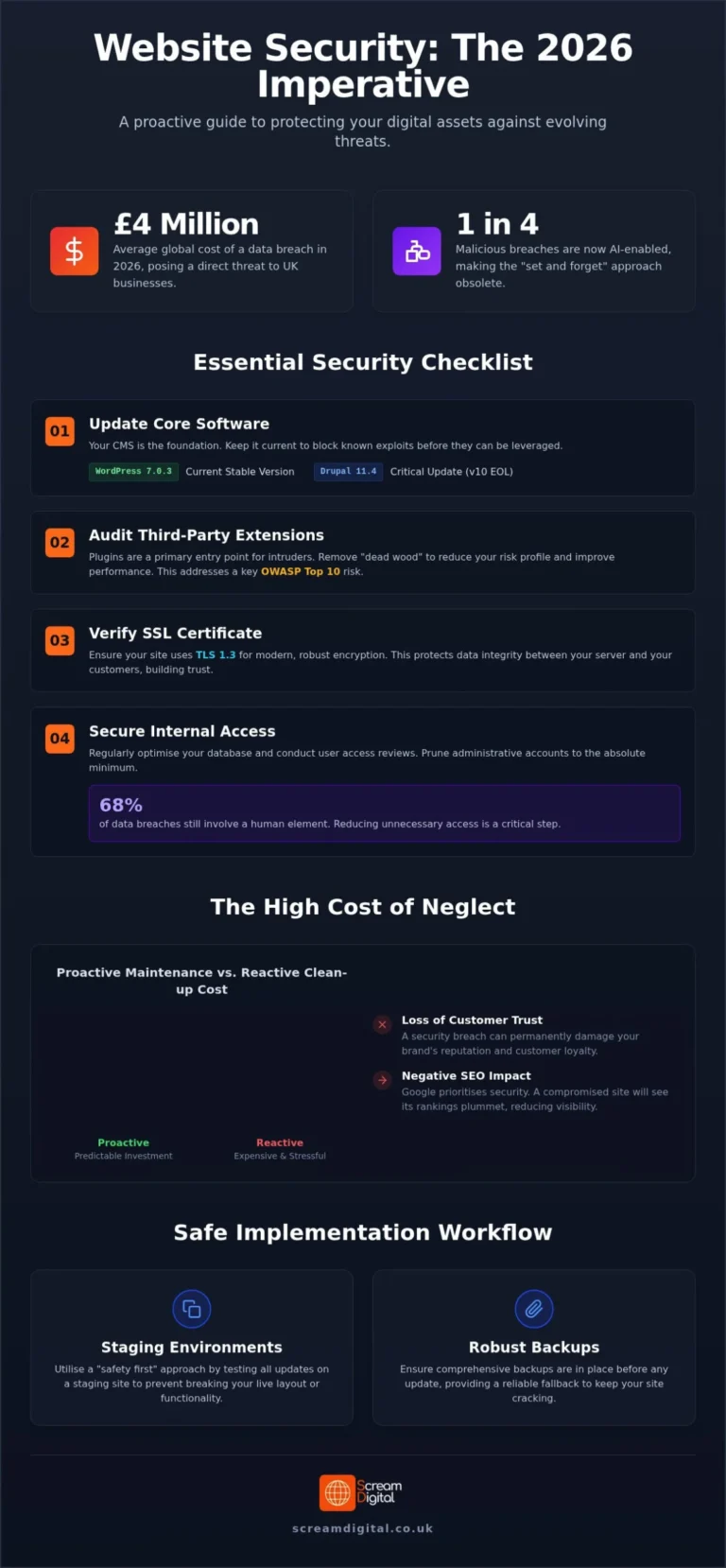
Security should never be an afterthought when running an online store. Customers trust you with sensitive information such as personal details, payment information and delivery addresses, making it essential to protect your website against potential threats.
Cyber attacks, including SQL injection, malware, phishing attempts and data breaches, remain common risks for online businesses. Even small websites can become targets if basic security measures aren’t in place.
Using SSL certificates to encrypt customer data, keeping your website software up to date, choosing secure payment gateways and enabling strong password policies are all fundamental steps towards protecting both your business and your customers.
Regular backups are equally important. Should something go wrong, having recent backups allows you to restore your website quickly and minimise disruption.
Investing in website security not only protects your business from financial and reputational damage but also reassures customers that they can shop with confidence. In today’s competitive online marketplace, trust is one of the most valuable assets you can build.
Final Thoughts
Starting an e-commerce business can feel daunting, but careful planning and the right tools make the process far more manageable than many people expect. Choosing suitable hosting, creating an attractive and user-friendly website, developing a clear marketing strategy, providing exceptional customer service and maintaining strong security are all essential building blocks for long-term success.
By investing time in these areas from the outset, you’ll create a professional online store that’s well-equipped to attract customers, build trust and grow sustainably as your business develops.
Want help putting this into practice on your own site? Take a look at our Web Development service.